
fertility clinic guide
Everything you need to know about egg freezing
A straightforward process that allows you to preserve your fertility and have kids later in life
By Anastasiia Timon and Anya Kern, co-founders of Blooming Eve
Medically reviewed by Dr. Yaron Goikhman, MD
Updated September 4th 2023

Egg freezing, also known as oocyte cryopreservation, is a medical procedure that has been used by thousands of women to help take control of their biological clock. It became more popular after 2012, when it was no longer considered experimental according to the American Society for Reproductive Medicine (ASRM).
While a woman’s body produces fewer eggs as she gets older, her uterus can still grow an embryo at a later age. Because of this, you can use eggs that were frozen when you were younger and when you are ready to start a family.
The process of freezing eggs
One egg freezing cycle usually takes about 2.5 weeks from fertility assessment through retrieval and early recovery.
- 1
Fertility assessment
Usually includes bloodwork and transvaginal ultrasound at a fertility doctor’s office.
- 2
Preparation
Your team reviews medications, timing, lifestyle changes, and what to expect during the cycle.
- 3
Stimulation
10-12 days of medication injections stimulate the growth of follicles, future eggs.
- 4
Egg retrieval
A short surgical procedure, usually around 15 minutes, performed under anesthesia.
- 5
Recovery
Most people avoid intercourse and intense exercise for up to 7 days after retrieval.

Why should you consider freezing your eggs?
The number of eggs each woman is born with, as well as the quality of those eggs, decreases over time. After the age of 35, the change becomes even more pronounced.
Although you cannot stop this process, reproductive science has provided a remedy in the form of egg freezing. Egg freezing gives you an option and raises your chances of having a baby later if you wish to, regardless of whether you want children now or are not even sure.

When should you freeze your eggs?
The overall recommendation is that the earlier, the better. Most doctors agree that the best age to freeze eggs is before 35 years old. Your most reproductive age is in your mid-20s, and the largest decrease in the number and quality of eggs often happens after 35.
Each case is individual, and for some women the decline may happen sooner than for others. A fertility assessment can help you understand your baseline and make a plan.
How much does it cost to freeze eggs?
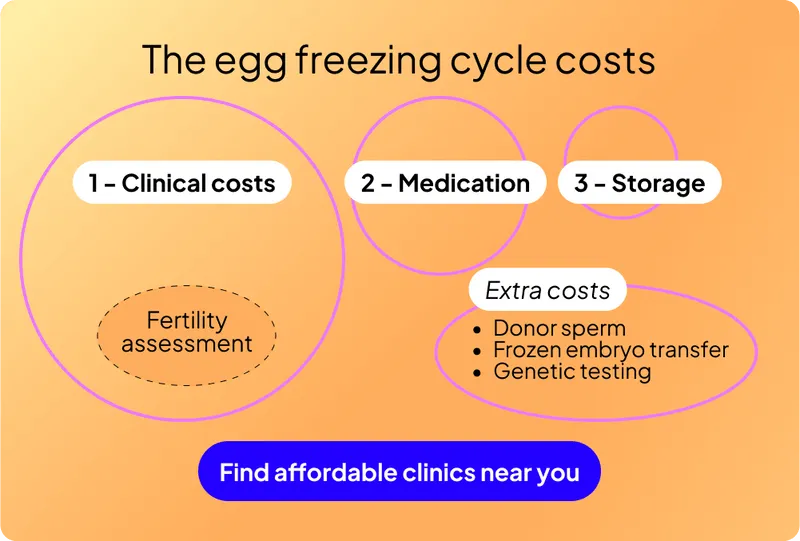
The cost of egg freezing without insurance can be anywhere from $6,000 to $30,000. The cost with insurance depends on your coverage, and you should reach out to your insurance company to learn what is covered, if anything.
The price for one cycle consists of three main elements: services billed by the clinic, medication, and annual storage.
The price of the clinic is the major part of the cost, and it varies a lot from clinic to clinic. Learn more about different elements of egg freezing cost or check the prices of fertility clinics near you.
Save money and get support
Up to $7,000 savings and continuous support throughout your fertility journey in our monthly fertility support subscription.

Medical risks and side effects of egg freezing
As with all medical procedures, egg freezing can have rare complications. The main risk during egg freezing is overstimulation of your ovaries, called OHSS. Medium to severe OHSS happens in less than 1% of stimulation cycles, and doctors monitor your reaction closely.
Most people feel good after the procedure, and severe symptoms are very rare. The most common side effects are fatigue and bloating during medication stimulation. Some women feel very emotional during or after the egg freezing process.
Afraid of shots and mixing medication on your own?
As a part of the process, you self-administer medication injections, but most women tolerate it very well. If you are afraid of shots, Blooming Eve can help you find nurse support for medication.

Before you decide – learn more about how fertile you are
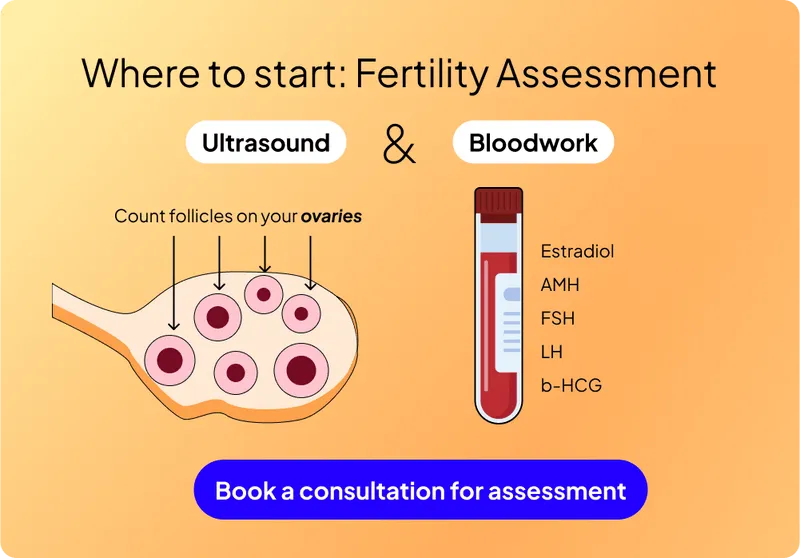
Before you decide on egg freezing, it is recommended to start with a fertility assessment. Knowing your baseline fertility will help you create a plan for your future family goals.
It will usually be tested by bloodwork and ultrasound, and it is covered by many health insurance plans.
How to prepare for egg freezing
Some changes, if applied 1 to 3 months before starting your egg freezing cycle, may positively affect your results. Weekly acupuncture treatment, lifestyle changes, and nutrition adjustments are common areas to discuss with your care team.
See examples of changes that can help prepare for egg freezing
Browse all egg freezing topics
What to look for while choosing a fertility clinic?
Compare success rates, pricing, doctor experience, and care quality.
Fertility testing at home vs at a fertility clinic
Understand what can be tested at home and when a clinic visit matters.
Common misbeliefs about egg freezing
Separate common assumptions from practical fertility planning.